


I’m just back from the Edinburgh TV Festival after having published a rather large thought experiment about the future of the BBC.
My argument in Public Media 2028 is that we should use the end of the Charter in 2027 to do something more radical than finding another way to fund roughly the same BBC for another decade. Instead, work out what we need from public media, protect those things properly, and build a commercial British media business with enough scale to compete.
It’s part straw man, part vision with a chunk of hopefulness. Inevitably at Edinburgh quite a few people wanted to talk to me about it. There were questions about the £20bn endowment for BBC News, some raised eyebrows at combining BBC entertainment, BBC Studios, Channel 4 and UKTV and quite a lot of discussion about whether people would pay for iPlayer. All fair enough.
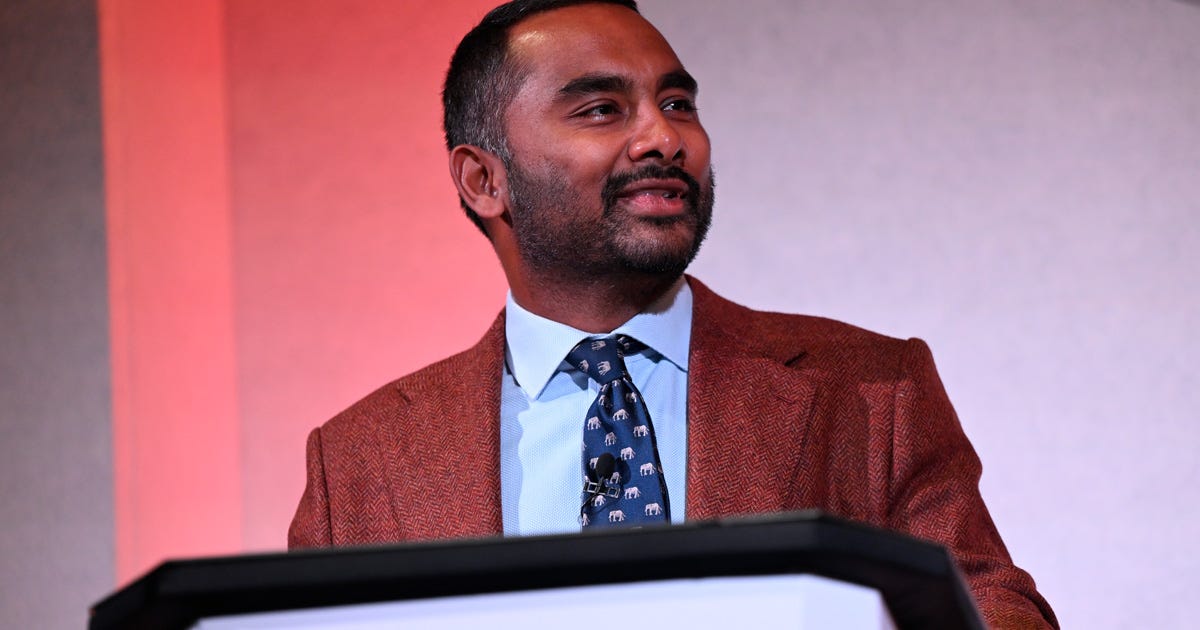
I also recorded an Edinburgh episode of The Media Club while I was there. This gave me a useful excuse to talk to a load of people at the Festival about where television is going, alongside listening to the main MacTaggart from YouTube’s Pedro Pina and the Alternative MacTaggart from Amol Rajan.
Between all of that, I kept coming back to something I’ve been writing about for years.
Pedro’s argument was that television isn’t dying, but the broadcasters no longer have the position they once did. “There is no monopoly anymore,” as he put it.
I’ve talked on about this quite a bit. Media companies have a tendency to assume their success is entirely down to the brilliance of the content they make. Sometimes it is. But distribution has always played a pretty big part too.
I’ve written before about the “crutches” that media businesses have. Radio’s historic monopoly gave it amazing distribution, which helped the content and made the marketing work harder too. The BBC has been particularly good at distribution. It built transmitters, helped create DAB and launched Freeview. Its content has spent most of the last hundred years with pretty much perfect distribution.
Television was the same. If you ran BBC One in 1995 you could put something on at 8pm and, almost regardless of what it was, millions of people would see it. You were on button one on virtually every television in the country and there weren’t very many other buttons.
That’s quite a crutch. It doesn’t mean the programmes weren’t good, but they enjoyed a distribution environment that would make today’s media companies weep.
Pedro is right that this has gone. Being universally available today doesn’t make you universally watched. When I talked to drama producer Nicola Shindler for The Media Club, she made a similar point from the programme-making end: “you don’t just get an audience automatically”.
For most of television’s history, getting the commission, the channel and the slot gave you a pretty decent head start. Now there’s another job to do. You have to make people notice the thing as well.
The more newsworthy part of Pedro’s speech was about prominence. The government is looking at whether public-service content should receive some form of prominence on platforms like YouTube. YouTube isn’t very keen.
Indeed, if you’re a creator and log into YouTube Studio, YouTube has been encouraging you to get involved in the debate. The pitch is basically that if broadcasters are given more prominence, that could mean fewer views for you. Pedro made much the same case in his speech, talking about YouTube as a “democracy of cultural production” and arguing that forcing it to favour broadcaster content would disadvantage creators.
Well, yes, it could. I can see why that’s a persuasive argument to a YouTuber. I’m less convinced by the suggestion that what we have now is some sort of completely democratic marketplace where the best video wins.
YouTube already decides what’s prominent every time I open the app. My homepage isn’t all of yesterday’s uploads ranked by a public vote. An algorithm has made decisions about what to put there based on what I’ve watched before, what it thinks I’ll like, safety, engagement and presumably hundreds of other signals.
Some of those decisions will be about giving me a good experience and some will, unsurprisingly, be useful to YouTube’s business. If I owned YouTube I’d probably want the algorithm to help YouTube too.
The problem is we don’t really know how those things are balanced. It’s difficult to audit how much weight is given to giving me what I want, keeping me on the platform, making money, safety, quality or anything that we might regard as having a benign public value.
So I don’t think this is really an argument about prominence versus no prominence. YouTube already has a prominence system. We’ve just swapped an EPG we could see for an algorithm we can’t.
BBC One didn’t get button one because it won an SEO competition. We put public-service broadcasters in good positions on the EPG because we decided there was a benefit in people being able to find them and, in exchange, those broadcasters had obligations about what they made and did.
We’ve recently carried some of that thinking across to connected televisions and we’re doing something similar with radio too. The new rules mean that platforms have responsibilities when listeners ask for licensed British radio stations. It doesn’t seem a huge leap to imagine that the same discussion is going to keep moving towards YouTube and other platforms.
Of course, none of this means algorithms are bad. Lucas Green from Banijay talked about using YouTube as a sort of real-time market research operation on the podcast: “You can put things out, A/B test them, see what works and use the information to develop programmes”. Television could probably do with a bit more of that.
For me the question is slightly different. Being very good at working out what I want to watch next doesn’t necessarily mean you’re going to show me everything that might be useful, interesting or important for me to see.
That’s also why I think we need to be careful about what we’re asking to be prominent. Should everything the BBC makes get an advantage because it’s the BBC? I’m not sure. BBC News has a pretty clear public purpose. So does local journalism. There are good arguments around children’s content, education and emergency information. The Traitors is a brilliant television programme, but I think it can probably look after itself when coming up against Mr Beast.
Amol Rajan’s Alternative MacTaggart came at all of this from a different direction. He talked about us “scrolling alone” and the movement from mass culture to lots of micro-cultures. Television, in his argument, had generated “bridging capital”, giving people who otherwise had little in common some shared experiences and references.
I agree with quite a lot of that. The scarcity that helped broadcasters commercially also had some interesting social side effects. Millions of people watched the same news and saw the same programmes. There were things you could talk about the next morning at work or school and reasonably assume that other people knew what you meant.
There’s obviously a danger of getting a bit misty-eyed about this. Lots of people didn’t watch the same thing, hated what was on, or went to the pub. The test card wasn’t necessarily the high point of British social cohesion.
But I think the general point stands. We’re not going back to that world and I’m not sure we’d want to. If we’re all increasingly getting different feeds, though, we probably have to be more deliberate about which bits of that shared media experience are worth keeping.
Fenton Bailey, who runs World of Wonder and makes RuPaul’s Drag Race, described the change in a rather more apocalyptic way when I talked to him. Media used to be a “precious commodity” because there was limited supply. Now, he said, “media is essentially free”. We’re consuming more of it than ever, but the audience has fragmented.
I suppose that’s why I found Pedro and Amol interesting alongside each other. Pedro is saying, quite reasonably, that the broadcasters’ old monopoly has gone. Amol is looking at some of the things that the old mass-media system produced and asking whether we’re losing something useful with it.
Amol’s answer was “Save Our BBC”. What’s interesting is that he’s also leaving it.
I don’t mean to have a go. Quite the opposite. You can care enormously about the BBC and still look at where media consumption is heading and decide that your own future is going to involve YouTube. He’s also been pretty clear that he thinks the BBC, on its present trajectory, will get smaller. I think he’s right.
One of the slightly odd things about the Charter debate is the suggestion that there are two possible futures. One where we do something radical to the BBC and another where we broadly leave it alone. I don’t think the second one exists.
If we renew broadly the same structure and broadly the same funding mechanism, the BBC will still change. Fewer households are buying licences, linear television viewing is falling and there’s more competition for people’s time. That will mean more savings and more difficult decisions about services. Some things will close, others will merge and there will probably be less money to make programmes.
We’ll then arrive at the next Charter with a smaller BBC and have another discussion about what to cut, what to merge and how much everyone should pay for it.
This is really the reason I’ve been thinking about Public Media 2028. If the BBC is going to get smaller, I’d quite like us to decide which bits shouldn’t.
I don’t want BBC News to gradually shrink because the number of television licences falls. I don’t think local journalism should be caught in the same squeeze. Nor children’s programmes, education, culture, the World Service and the other things where we’ve decided there’s a value to them beyond the amount of money they can generate. Those are things we can choose to fund properly.
Entertainment has a different problem. The BBC, Channel 4 and UKTV are competing in a commercial market where their rivals are some of the biggest media and technology companies in the world.
There’s sometimes a tendency in these discussions to say that Netflix makes British programmes, Disney makes British programmes and YouTube has lots of British creators, so perhaps we don’t need to worry about this stuff so much. I think that’s wrong.
There was some interesting research from Oliver & Ohlbaum for Everyone RT released at Edinburgh. It found that the public-service broadcasters were responsible for 71% of the money invested in original UK television in 2024, and 85% of the original hours made in 2025. Nearly two-thirds of those PSB hours were made outside London.
That’s a lot of telly, but the bit I found particularly interesting was what happens after the commission. O&O looked at new production companies that got their first or early commissions from the PSBs over the last decade. Those companies went on to generate an estimated £3.1bn in revenue across the wider television commissioning market in just the last five years.
It’s something I’ve seen in audio too. BBC commissions helped build British independent production companies that were then in a much better position when Spotify, Audible and other new buyers turned up. The initial public-service commission doesn’t just buy the programme. It can help create the company, train people, develop ideas and build IP that then has a life elsewhere.
The O&O numbers show the same thing happening at much greater scale in television. In 2025, 76% of the independent production companies commissioned by the PSBs were small producers, with around £365m going into small and micro production companies.
That’s quite an important part of the ecology to throw away.
Netflix, Disney and YouTube aren’t bad. Indeed, I use all of them. Their interests will often overlap with Britain’s interests, but they don’t have to. Disney’s job is to do what’s right for Disney. I think we should probably have someone on our side of the ledger too. This is where the scale part of Public Media 2028 comes in.
I put the proposal to Deadline’s Jake Kanter on the podcast. He wasn’t convinced by all of it. He thought asking the BBC to give up BBC News was a bit like asking it to sign its own death warrant. He’s probably right that they won’t volunteer.
He was much more interested in putting the entertainment businesses together. He described Channel 4 as looking “increasingly small and isolated” and pointed out that “subscale” is the pretty chastening word that the bew BBC Director General Matt Brittin used to describe it.
I think that’s the problem. Channel 4 can make a brilliant programme and still struggle to get people to find it. Meanwhile the BBC, Channel 4 and UKTV maintain separate destinations and fight separately for attention, advertising, subscriptions, rights and talent against global platforms.
This is why my proposal puts BBC entertainment, BBC Studios, Channel 4 and UKTV together, with iPlayer and Sounds at the centre of a publicly owned commercial media company. At the same time, news gets the funding and independence that news needs, and we directly fund the local, children’s, cultural and educational things we want.
It also means we can be clearer about what we’re asking platforms to support. Rather than saying the BBC is public service and therefore everything the BBC does deserves prominence, we can identify the things we’re actually supporting for public reasons and decide what distribution guarantees should go with them.
I’m a fan of the BBC. I want the journalism, British children’s programmes, shared experiences and investment in British ideas and talent. I want media that occasionally connects people who aren’t already in the same WhatsApp group.
What I’m less convinced about is that the only way to get those things is to keep them all attached to the same organisation and then spend the next decade trying to find enough money to stop all of it getting smaller at the same rate.
So I understand Amol’s “Save Our BBC”. I think I’d just put it slightly differently. I’d like to save what the BBC does.
The BBC was created to make use of a new media technology in the national interest. A hundred years later the technology, competition and audience have all changed. The job for the next Charter shouldn’t really be working out how to put that back. It should be deciding what we want the next version to achieve.
AOB
Do check out our Edinburgh TV Festival edition of The Media Club [Apple], [Spotify] or [YouTube].
Have a read of Public Media 2028