


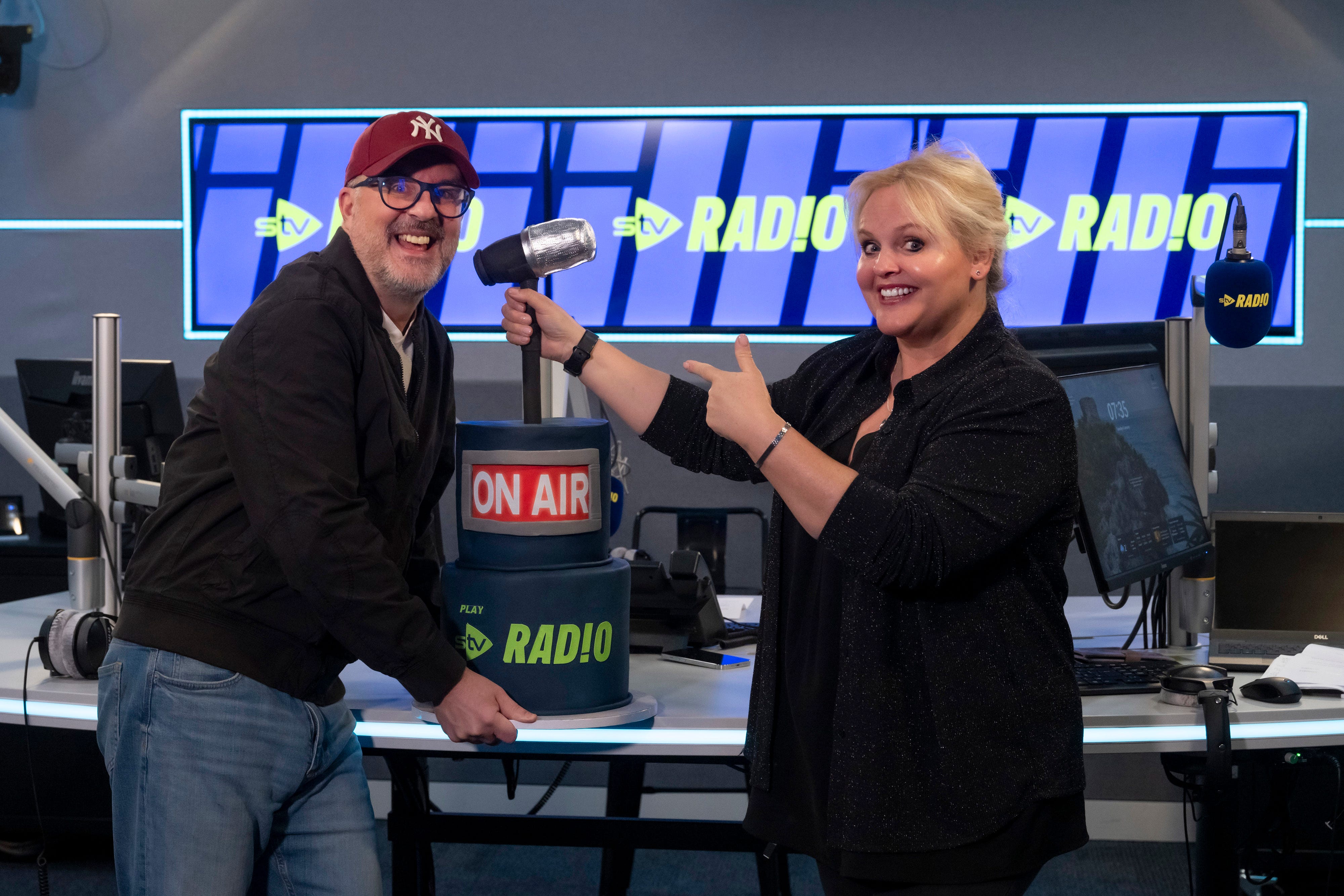
We’re not short of new radio stations, there doesn’t seem to be a week that goes by when another spin off doesn’t appear. What hasn’t happened very often are well funded new stand alone stations.
There’s a reason for this, it can often be expensive, and it’s a gamble. With a spin off you’re building on something with heritage and value. It’s an easier sell to listeners (and the board!). A new station requires making a leap. For every Boom Radio success there’s a Scala.
this edition of the newsletter is supported by radio experts - a sound perspective - who help agencies and their clients plan, buy and create successful radio and audio campaigns that put them ahead of the pack. find out more at radioexperts.co.uk
Scotland has had its fair share of people having a go with new launches. Scottish identity played a strong part in Scot FM, Beat 106 and Talk 107’s launches - they’re now Heart, Capital and Nation - but still with more local content than their English cousins, but now subsumed into English networks.
Part of the reason they still retain more local content is that the stations need to keep competitive with Bauer’s Clyde 1 and Forth 1 that have been, and still remain, dominant in their market.
20 years ago (Q2/2006) Clyde 1 had 597k listeners, they now have 687k. Similarly Forth 1 had 331k listeners and now has 338k. Their hours are equally impressive. Their heritage is partly the driver of their success, demographically they are broad radio stations, with similar reach across all ages.
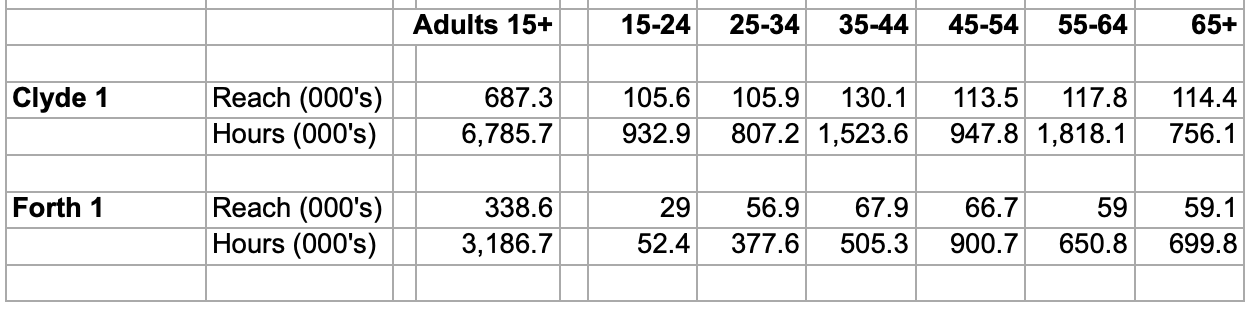
When STV Radio bosses Graham Bryce and Bobby Hain joined me on The Media Club in February, they identified this as an opportunity. The older end shouldn’t really be listening to Forth and Clyde any more. Their playlists are not that friendly to the 55 plusses. Bauer themselves have re-branded sister analogue stations into Greatest Hits Radio Scotland, handily with a Scottish presenter - Ken Bruce - in mid mornings. It’s doing solidly for them at 405k reach, though down on the quarter (from 430k) and year (from 445k).
STV Radio don’t have the benefits (or baggage?) of any analogue assets so remain digital only. There have been a number of other digital only stations who tried their luck North of the border, Pure Radio peaked at 47k in 2023 and Go managed just a few thousand in 2017 (but remains on air).
STV has good DAB coverage across the nation, cross-promotion on TV and known presenters including Ewen and Cat on Breakfast, but success is not definitely assured. The good people of Digital Spy felt it would likely hit around the 50k reach figure, though some weren’t so generous. It’s gone in at 138k reach and 1.2m hours which is a pretty respectable start and a good base to build on. Looking at Scotland as a whole shows how competitive a market it is. Their aim is to get 500k listeners over the new few years.
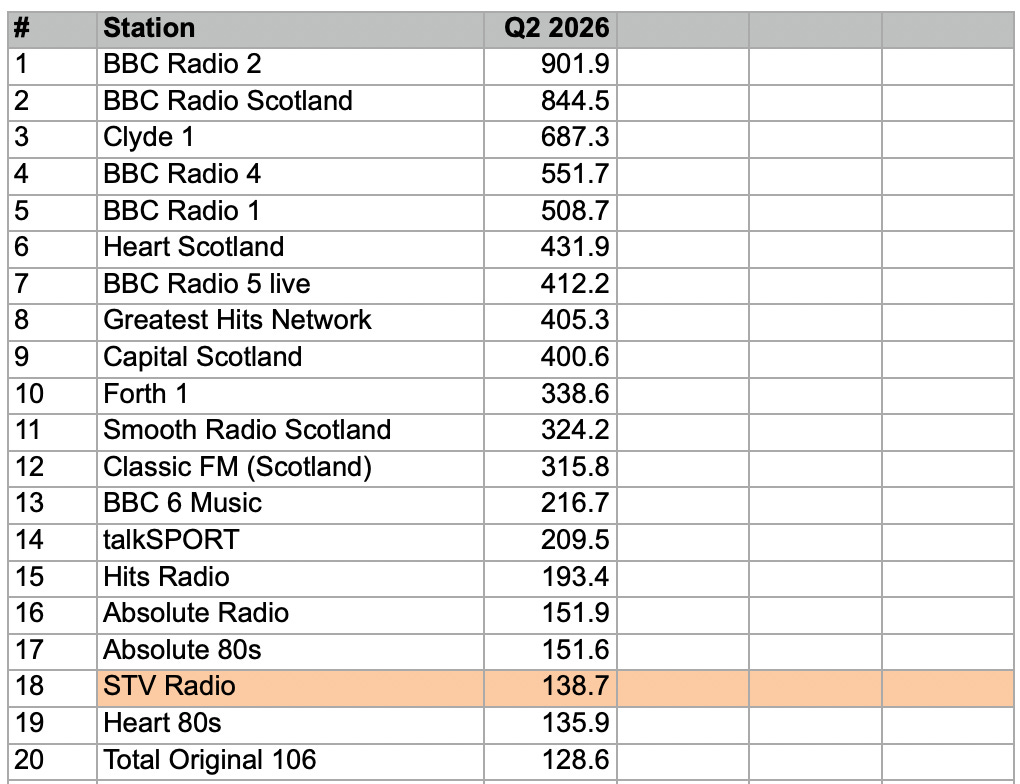
It is an older radio station. When you break it down you can see that the reach and hours sit with 45 plusses particularly 55 to 64. I think their results show that their thought of trying to pick off Clyde/Forth’s top end was right.

However, if you look at the raw numbers, that doesn’t seem to be where they’ve come from. If anyone has lost out I think it would be BBC Radio Scotland, who’ve also have had some schedule turbulence at the same time and maybe a bit of Greatest Hits too.
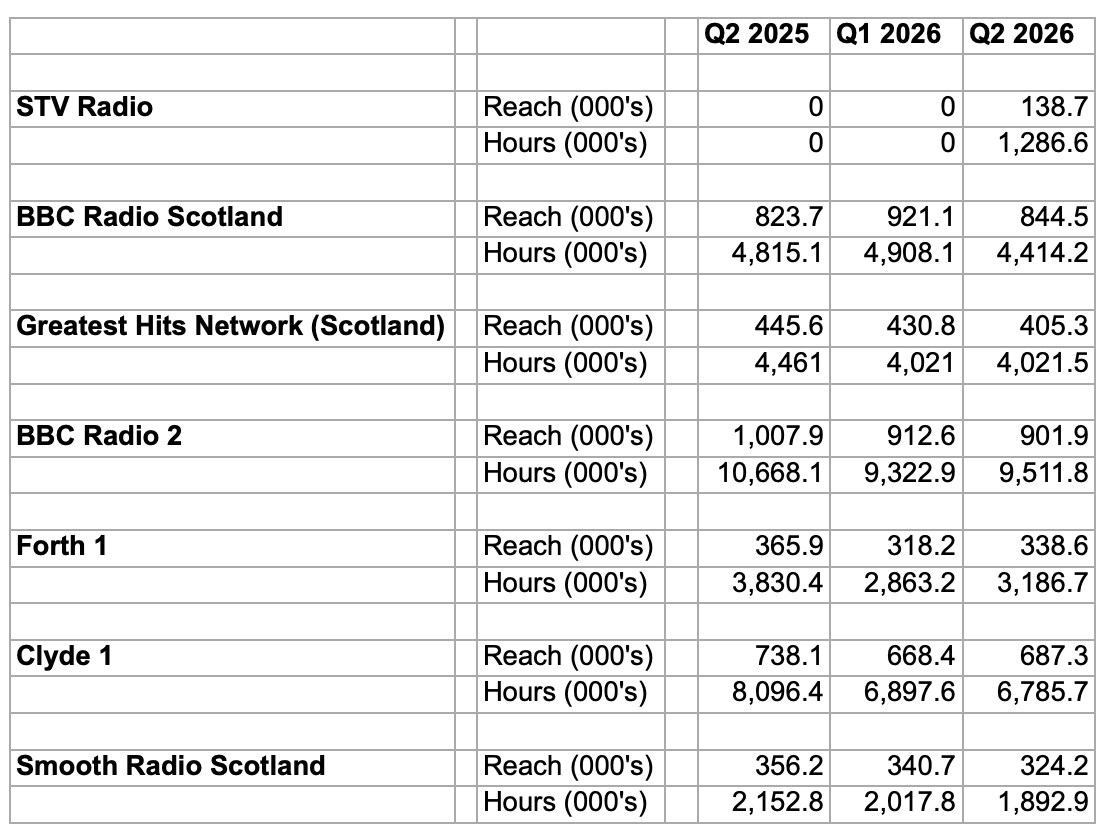
If we go a bit geeky (what more - Ed?), you can take all of STV Radio’s listeners and see how they spend the rest of their radio listening time. Whilst they give STV Radio 1.28m of their hours, their total listening is 4.02m - so what else do they consume? This is perhaps a better insight into where their future growth may come from.
With that, the top station they share hours with is the Hits Radio Network (so Clyde and Forth and similar stations in Scotland). An STV listener gives them 413k hours of their time and they share 50k of reach with them. Then there’s Greatest Hits who get 409k of their hours from 39k people and BBC Radio Scotland with 155k hours from 35k listeners. What does this tell us? Well, it shows that people who’ve made the switch are pretty loyal already to STV - they’ve got an average hours of 9.3 which is impressive and suggests they’ve created a product that resonates.
The challenge, like it is for most radio stations, is getting more people to sample it. RAJAR has a rudimentary ‘awareness’ score of stations. Clyde 1 has 64% and BBC Radio Scotland has 51%. It’s a good reminder of how low in importance radio is in the mind of the consumer - “How could you not know about BBC Radio Scotland?!’ - but it shows the challenge stations have of staying front of mind. STV Radio scores just 13%. If they can drive awareness, and then trial up, these results show they’ve got a good chance of converting people. But even with owning a national TV station that’s going to be a tough challenge.
Ages
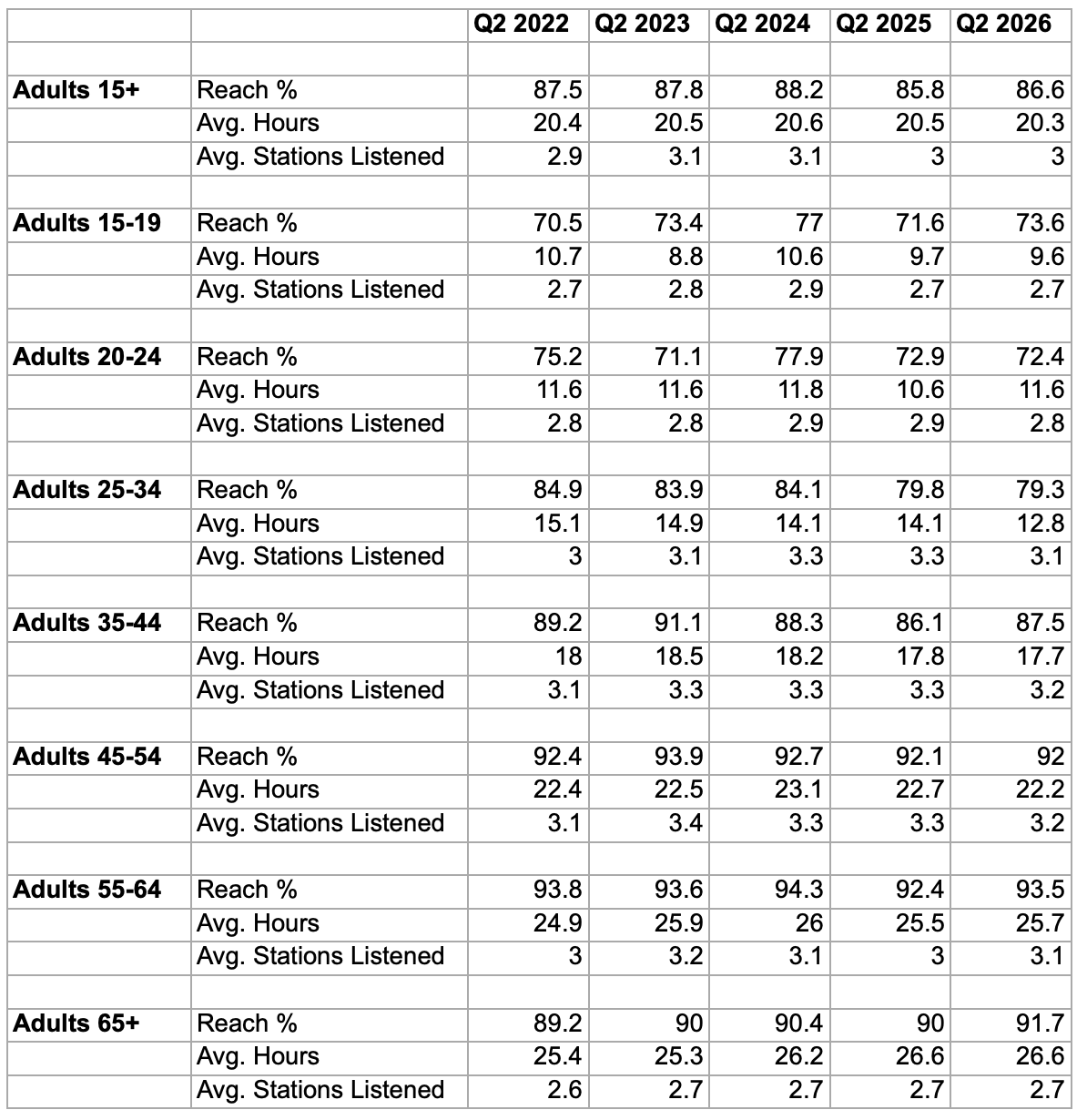
STV Radio aren’t the first people to have identified that it’s easier to attract older listeners than younger ones. It’s a group who are radio fans and they have more time to listen. Greatest Hits Radio and Boom Radio are built around appealing to them. 65 plusses make up a higher share of Radio 2’s audience than they have for 5 years.
Some people equate this to saying that young people don’t listen to the radio any more. The data just doesn’t prove that. The sample size for the demos (and I’ve broken down 15 to 24s into 15 to 19s and 20 to 24s) is over a thousand people per demo and each quarter a different bunch of people are spoken to, it’s pretty resilient information. With all of this data, it’s the trend that you look at and the last 5 years seems pretty stable. You could argue that average hours for 15-19s are dropping or that they’ve bounced around at a similar level. 20 to 24s are pretty static. Maybe we’ve reached their natural baseline?
My pop theory is that partly 15 to 24s are resilient because they’re in multi-generational households so their exposure to radio is pretty good, and there could be a link between them and 35 to 44s (their Mums and Dad). When I look at this table I worry more for the 25 to 34s. Their reach is dropping and their average hours are dropping. They are the generation that grew up with multi-platform audio from DAB to podcasting to music streaming. They can comfortably find audio entertainment outside of radio. They used to be a core radio target - but their changing consumption is likely to flow through to later generations over time. It’s not precipitous, but it requires some vigilance.
For me the issue for the core radio operators - commercial and BBC - is that the efforts around younger audiences (under 35) is under developed and where there is effort it lacks success.
Firstly there are no teen-focused audio products from the BBC or Commercial Radio. Radio or podcasts. Nothing. There’s content that has some teen appeal, but there’s no product specifically for them.
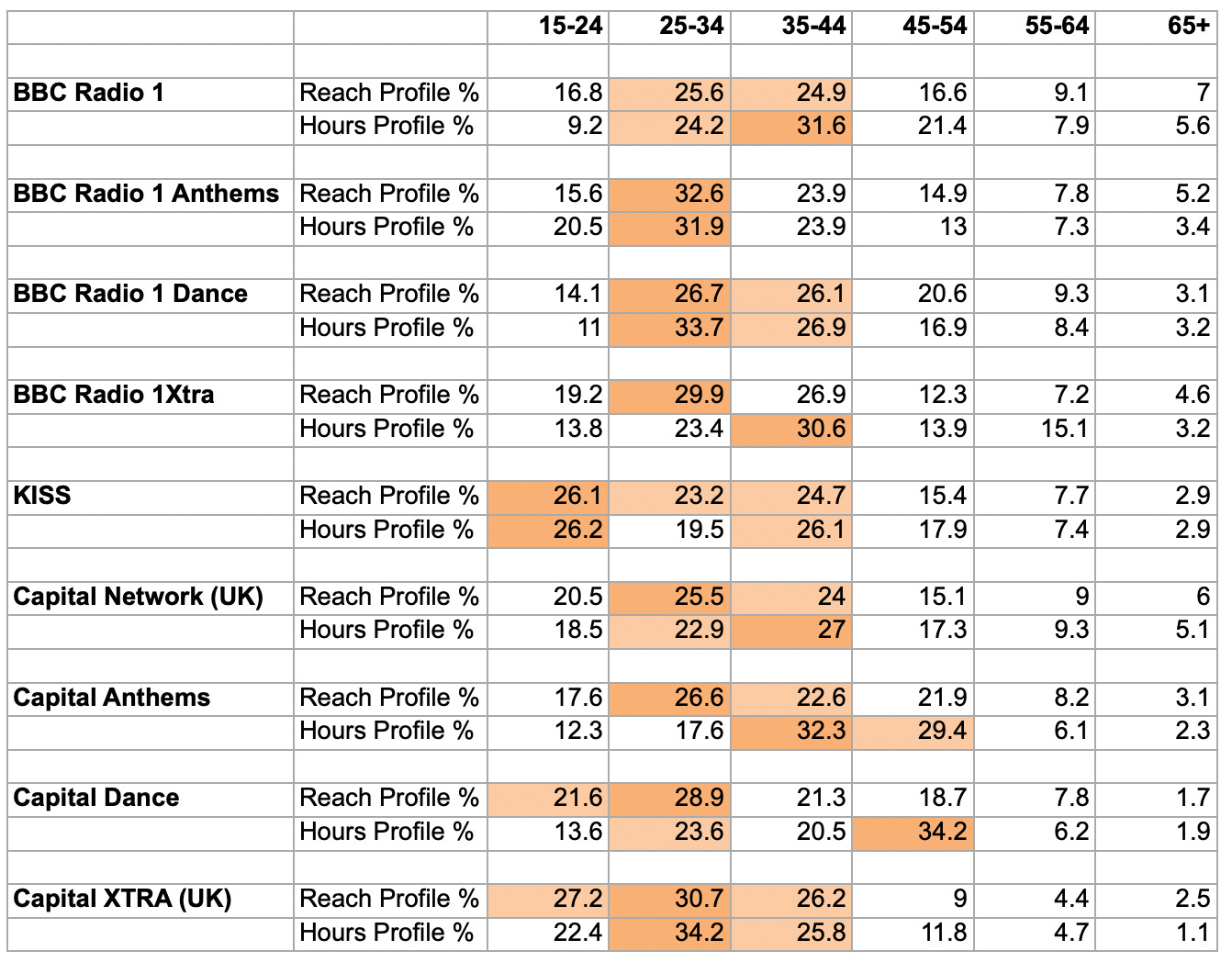
If we go a little older, on the radio side, the chart below shows what proportion of the station’s reach and its hours come from different demos. Darker orange shows higher numbers. The hours numbers show where interest is focused - it’s the amount of time those demos give those stations. Now as we’ve discussed, younger people listen less, but reach requires just 5mins of listening in a week. These radio products are all designed to satisfy broader audiences, so they resonate less with any young demos.
BBC Sounds has a focus on 15 to 34s, but it shares the same issue as radio - they haven’t managed to create shows that uniquely resonate with the target audience. It isn’t for want of trying and there are clearly commissions with that as a focus, but the success of those isn’t easy to divine.
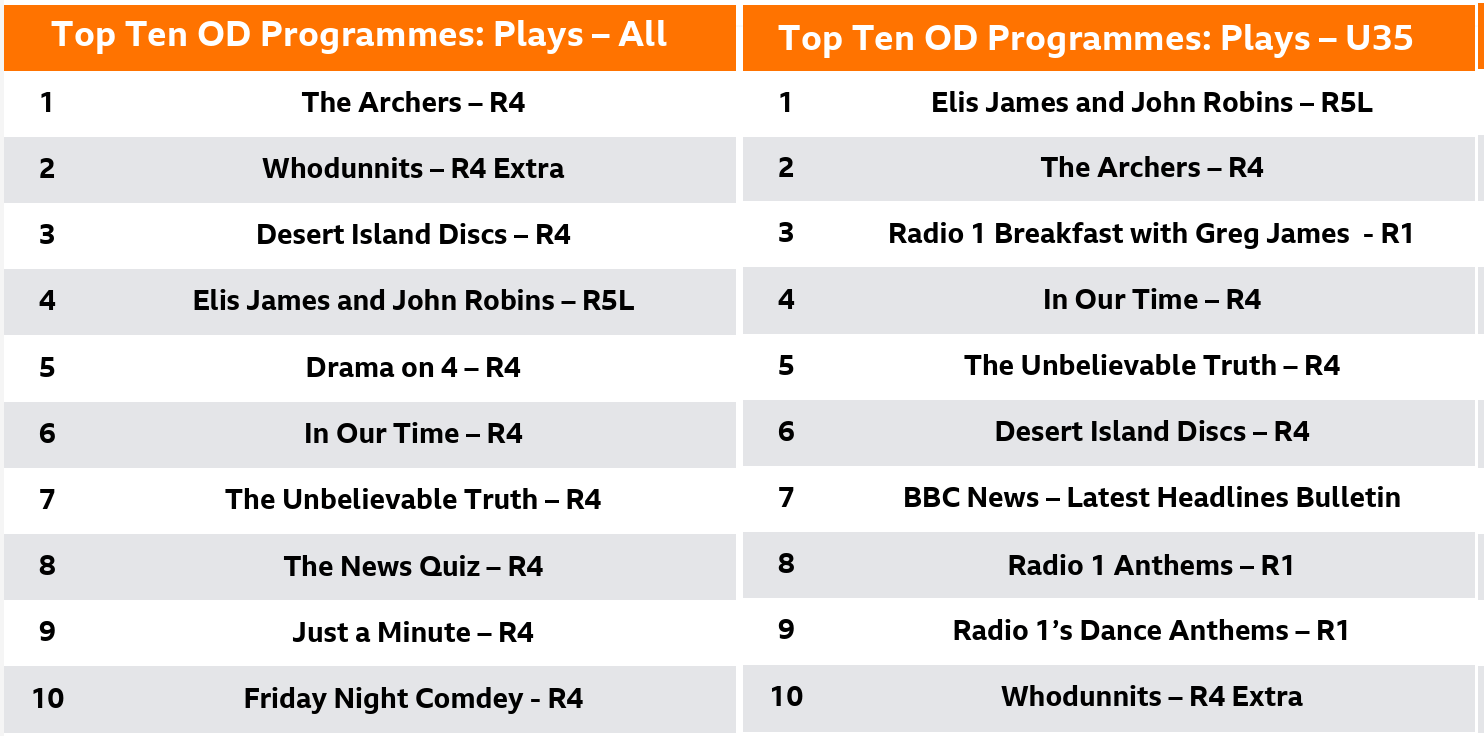
If we look at their data from last quarter - The Archers, In Our Time and Desert Island Discs appear in both lists. I’m happy that under 35s are enjoying those programmes, but there is little there that shows they’re building successful programmes native to that audience. You then have the situation where Elis and John are the number 1 show for under 35s. Now having sat in an audience for their live show it’s maybe a little more 25 to 44 - but then why if it’s number one have they been released to make their show a commercial one (with continued carriage on BBC Sounds?).
It’s easy to attack the BBC on this, but at least there are attempts at creating audio (or shows that include audio distribution). Global and Bauer have directly created almost nothing with any scale that appeals to this audience. Both have co-opted existing shows and Global has acquired Fellas Studios who have a youth focus, but I worry there is little drive, desire, time or even maybe skill to build products for the next generation of audiences.
As everything gets more competitive, people drift back to their heartland and go for the easier wins. Why make life difficult for yourself?
Maybe I’m out of the loop, but I would love to see what any of our big radio operators are doing around product development for the next generation of listeners (and media consumers) - linear, podcasts, YouTube, whatever - what are the native media experiences we’re creating for younger audiences?
Thanks again to radio experts - a sound perspective, for sponsoring this post and also thanks to Hallett Arendt who provide me with Octagon, the perfect way to analyse your radio data!